
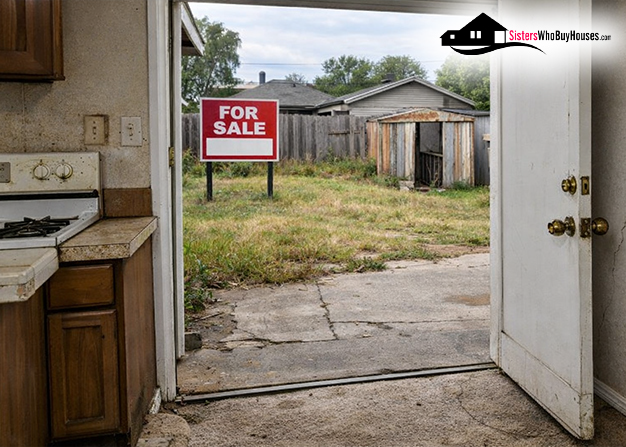
Most sellers go into listing prep with the same fear: if I don’t fix everything, buyers will walk. So they spend thousands on updates that buyers barely notice, burn weeks of time, and still end up negotiating. Here’s the truth: not every repair adds value, and some actively waste money you could walk away with at closing.
This guide breaks down exactly what not to fix before selling a house, what repairs are worth it, and when skipping repairs entirely makes more sense than patching things up.
Quick Answer: You generally do not need to fix cosmetic flaws, outdated but functional systems, or low-ROI upgrades like full kitchen remodels before selling. Skip repairs that cost more than they recover in listing price. Focus only on safety hazards, structural issues flagged by inspectors, or items required by your local market’s buyer expectations.
What Not to Fix When Selling a House: The Full List
Sellers waste an estimated $5,000 to $15,000 on unnecessary pre-sale repairs every year. The repairs below almost never pay for themselves, and skipping them will not kill your sale.
Cosmetic Defects Buyers Expect to Handle Themselves
Scuffed baseboards, minor wall dings, worn carpet in secondary bedrooms, dated light fixtures, and stained grout are cosmetic defects. They make a home look lived-in, but buyers already expect that. Most buyers mentally budget a cosmetic refresh into their offer price anyway.
Spending $3,000 on new carpet throughout the house when buyers may tear it out for hardwood does not add $3,000 to your net proceeds. It adds noise to your timeline and stress to your move.
Don’t spend money on:
- Interior paint (unless walls have heavy damage or very dark colors)
- Replacing cabinet hardware
- Upgrading light switches and outlet covers
- Refinishing hardwood floors that are worn but functional
- Regrouting or recaulking tile that is old but clean
Full Kitchen or Bathroom Remodels
A full kitchen remodel returns roughly 60 to 80 cents on the dollar at resale according to Remodeling Magazine’s annual Cost vs. Value report. That means a $25,000 kitchen renovation might recover $17,000 in added value. You just paid $8,000 to do work someone else might rip out and redo to their own taste.
Minor refreshes, like a fresh coat of paint on cabinets or new hardware, can make sense. Full remodels before listing almost never do.
Outdated but Functional Systems
A 15-year-old HVAC unit that runs correctly does not need to be replaced before you list. Same for an older water heater that still functions within expected lifespan. Buyers and their agents understand that systems age. What triggers renegotiations is a system that is broken or clearly at end of life, not one that is simply older.
Replacing functioning systems just to neutralize buyer objections usually costs more than the repair concession you were trying to avoid.
Landscaping Beyond Basic Curb Appeal
Mature trees, overgrown shrubs, and patchy grass are not reasons buyers walk. Extensive landscaping work like retaining walls, irrigation system overhauls, or full lawn renovation is money that disappears into the ground. Mow, edge, and trim. That is enough.
Permits for Old Unpermitted Work
This one surprises sellers. Pulling permits retroactively on old work like a deck addition or a finished basement can cost thousands, delay your listing, and sometimes trigger required code upgrades. Many buyers purchase homes with unpermitted work and either accept it, price it in, or require a repair concession. Talk to a real estate attorney before assuming you must bring everything into compliance.
What Not to Repair Before Selling: Structural vs. Cosmetic Repairs
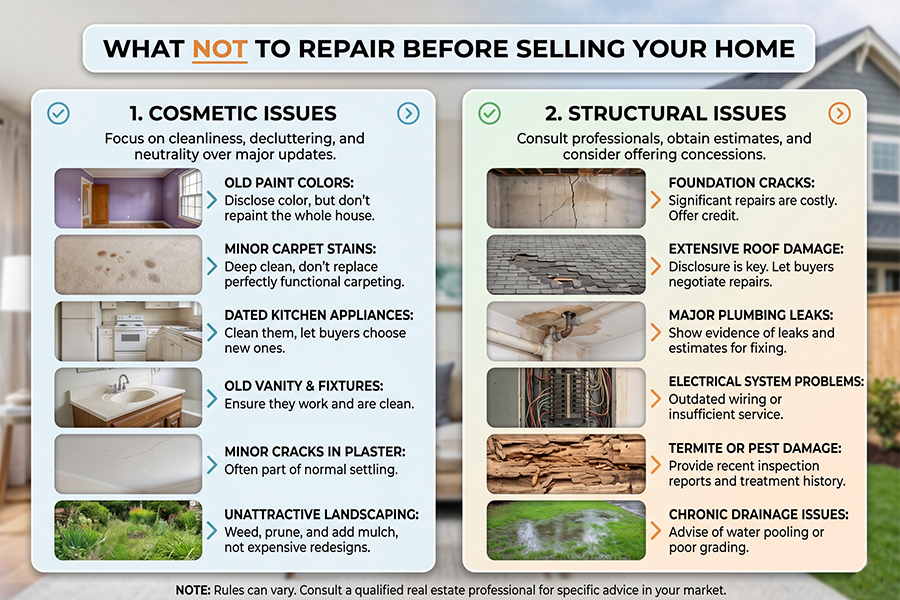
Understanding the difference between cosmetic defects and structural issues is where smart sellers save the most money.
Cosmetic Issues: Almost Always Skip
A cosmetic defect is anything that affects appearance but not function or safety. Cracked caulk around a tub, faded exterior paint, worn vinyl flooring, and older but working appliances are cosmetic. They show up in buyer walkthroughs, not inspection reports as required repairs.
Structural Issues: Almost Always Address
A structural issue affects the safety, integrity, or habitability of the home. Foundation cracks with active movement, roof leaks causing interior damage, faulty electrical panels with documented hazards, active plumbing leaks, and mold from water intrusion fall into this category.
These items will appear in the buyer’s inspection report. Buyers will either walk, demand a major price reduction, or require repairs before closing. Addressing legitimate structural issues before listing gives you control over the cost and prevents last-minute renegotiation.
When in doubt, pay for a pre-listing inspection. For $300 to $500, a licensed home inspector identifies what a buyer’s inspector will flag. You can then decide whether to repair, disclose, or price accordingly before offers come in.
Selling House As Is: When Skipping All Repairs Makes Sense
Sometimes the most financially rational move is not to repair anything at all. An as-is sale means you disclose the property’s condition and sell it in its current state, without making any repairs or offering repair credits.
An as-is sale works well when:
- The home needs extensive repairs that exceed your available budget
- You are facing foreclosure, divorce, probate, or another timeline-sensitive situation
- You have inherited a property in poor condition and do not want to manage a renovation
- The repair costs would eat into your equity without meaningfully increasing the listing price
- You want certainty over timeline and do not want to deal with inspection renegotiations
Sisters Who Buy Houses purchases homes as-is throughout the region. No repairs, no showings, no contingencies. If you want to understand what that process looks like start to finish, the how it works page lays out each step clearly.
What Repairs Are Worth It Before Selling?
Now for the flip side. Some repairs do protect your net proceeds and help your home sell faster. The key metric is repair ROI: does the cost of the fix recover more than its cost in added value or days-on-market reduction?
High-ROI Repairs to Consider
Fixing active leaks and water damage: Active water intrusion is the single biggest buyer deterrent in home inspections. A $500 plumber visit to fix a leaking pipe or a $1,200 roof repair to stop a small leak can prevent a $10,000 price reduction at negotiation.
Replacing broken fixtures and hardware: A broken door handle, a cracked window pane, a toilet that runs constantly. These small, cheap items signal neglect when buyers walk through. Each one costs under $100 to fix and prevents the impression that the home has been ignored.
Addressing electrical hazards: Exposed wiring, double-tapped breakers, and non-functioning GFCI outlets in kitchens and bathrooms are often flagged as safety issues in inspection reports. These are relatively cheap to fix ($200 to $600 in many cases) and eliminate a mandatory repair request that buyers will use as leverage.
Cleaning and deep decluttering: This is not a repair, but it is the highest-ROI thing you can do before listing. Professional cleaning typically costs $200 to $400. It changes how every room photographs and how every buyer feels walking through the door.
First impressions at the front door: Fresh mulch, a new welcome mat, a clean front door with working hardware, and a functional porch light cost under $200 and directly impact buyer perception before they even step inside.
Repair Concessions: A Smart Alternative to Pre-Sale Repairs
If a buyer’s inspection reveals issues you did not address, you have options beyond doing the repair. A repair concession, also called a closing cost credit, allows you to reduce the purchase price or give the buyer a credit at closing in lieu of making repairs.
This approach works well because:
- You avoid the hassle and uncertainty of contractor scheduling
- The buyer gets cash to handle the repair their way
- The sale stays on track without delays
Most real estate agents can help you calculate whether a concession is cheaper than the repair. In many cases it is, especially on larger projects where contractor bids inflate quickly.
Seller Disclosure: What You Are Required to Tell Buyers
Skipping repairs does not mean hiding known problems. Seller disclosure laws vary by state, but most require you to disclose material defects that you are aware of, including things like:
- Known foundation issues
- History of flooding or water intrusion
- Roof age and known leaks
- Presence of mold or asbestos
- Prior pest infestations
Failure to disclose known defects can expose you to legal liability after closing. When you sell a home as-is, disclosures still apply. You are not waiving your disclosure obligations by skipping repairs; you are simply pricing the known condition into the sale.
If you have questions about what needs to be disclosed in your situation, the frequently asked questions page covers common seller concerns and what to expect when working with a direct buyer.
Days on Market: How Repair Decisions Affect Your Timeline
The longer a home sits on the market, the more leverage buyers gain and the lower your eventual sale price tends to be. Homes that go through two or three rounds of inspection renegotiations often sit 30 to 60 days longer than comparables.
Pre-addressing deal-killing issues, pricing realistically for as-is condition, or selling directly to a cash buyer all reduce days on market and limit renegotiation exposure. If certainty of closing matters more than maximizing list price, an as-is cash sale to a direct buyer like Sisters Who Buy Houses eliminates the inspection-renegotiation cycle entirely.
Frequently Asked Questions
What repairs are required by law before selling a house?
No federal law requires specific repairs before selling. However, local jurisdictions may have transfer requirements (like smoke detector or CO detector installation), and lender-financed buyers may have appraisal conditions that require certain repairs for the loan to fund. Cash buyers typically have no such requirements.
Should I fix up my house before selling or sell as-is?
It depends on your equity, timeline, and repair scope. If repairs cost less than 2% of your expected sale price and directly address inspection deal-killers, they often pay off. If repairs are extensive or uncertain in cost, an as-is sale to a cash buyer typically produces a faster, cleaner close.
Do I have to fix everything a home inspector finds?
No. Home inspection findings are a negotiation starting point, not a mandatory repair list. Buyers can request repairs, credits, or price reductions. Sellers can accept, counter, or decline. In a competitive market, sellers have more leverage to decline minor requests.
Will buyers accept a house with no repairs done?
Yes, frequently. Cash buyers and investors actively seek homes that need work. Even traditional buyers often prefer a lower price and handling repairs themselves over paying a premium for a seller’s renovation choices.
Is it worth fixing foundation issues before selling?
Active, worsening foundation problems will surface in every inspection. If the damage is significant, repair or disclose and price accordingly. Minor, stable cracks that have been monitored and are cosmetic may not require repair but do require disclosure.
What is the difference between a cosmetic repair and a structural repair in real estate?
A cosmetic repair affects appearance only, like paint, carpet, or fixtures. A structural repair addresses the home’s physical integrity, safety, or habitability, like foundation, roof, electrical, or plumbing systems. Structural issues carry buyer and lender scrutiny. Cosmetic ones typically do not.
Can I sell a house that needs major repairs without losing a lot of money?
Yes. The key is pricing honestly for as-is condition or selling to a direct cash buyer who purchases homes in any condition. Trying to mask major repair needs while listing at full market price is the scenario that ends in lost money and failed contracts.
The Bottom Line
The question is not “should I fix my house before selling?” The real question is “which repairs actually protect my net proceeds?”
Skip cosmetic updates, full remodels, and anything that costs more than it recovers. Address genuine safety and structural issues that will derail inspections. Disclose what you know. And if repairs feel overwhelming or the timeline does not support them, know that selling as-is to a direct cash buyer is a legitimate, often financially sound option.
If you want a no-obligation cash offer on your home in its current condition, Sisters Who Buy Houses makes the process straightforward. You can also read what real sellers say about the experience before deciding.
Sisters Who Buy Houses is a direct home buyer serving homeowners who want a fast, fair, as-is sale without the repair and listing process.