

Handing over the keys should feel like the end of the road. But for many home sellers, a quiet worry lingers: what if the buyer calls next year with a complaint? What if something goes wrong after closing?
The answer depends on where you live and what you knew about the property. In most states, sellers remain legally liable for 2 to 10 years after selling a house, depending on state statutes of limitations, the type of claim, and whether all required disclosures were made. Fraud or intentional concealment can extend that window even further.
This guide breaks down exactly how post-sale liability works, what triggers it, how long it lasts in different situations, and what you can do right now to protect yourself, whether you’re preparing to sell or already past closing.
What Does “Liability After Selling a House” Actually Mean?
Seller liability after a home sale refers to the legal responsibility a seller may carry even after the property title transfers to the buyer. Closing day does not automatically end all obligations.
A buyer can potentially file a claim against a seller for issues discovered after moving in, particularly if those issues were known to the seller but left off the disclosure paperwork. The liability is not about whether the problem exists; it centers on whether the seller knew about it and chose not to say so.
Under the laws governing real estate transactions in most U.S. states, sellers are required to complete a seller’s disclosure statement before closing. This document lists known defects, past repairs, water damage history, environmental hazards, and other material facts. Failing to include something you knew about is where legal risk begins.
How Long Are You Liable After Selling a House? The Core Answer
Seller liability after a home sale typically lasts 2 to 10 years, though the exact window depends on three factors working together: state law, the nature of the claim, and when the buyer discovered the problem.
The Statute of Limitations
Every state sets a statute of limitations, which is a legal deadline for filing a claim. Once that window closes, a buyer generally cannot sue, regardless of what they discovered. Here are a few examples:
- Kentucky: 5 years for written contracts; 1 year for oral contracts
- Arizona: 6 years for written contracts; 3 years for property damage
- Texas: 4 years for written contracts
- Connecticut: 3 years for fraudulent misrepresentation; 6 years for written contract breach
- Florida: 4 years for most real estate fraud claims
Because every state is different, sellers in Louisville and throughout Kentucky should understand that local statutes set the actual deadline, not national averages. A Kentucky real estate attorney can confirm the specific window that applies to your transaction.
The Discovery Rule
Many states apply what is known as the discovery rule: the statute of limitations clock does not start ticking at closing. Instead, it starts when the buyer discovers (or reasonably should have discovered) the problem. This matters because a hidden defect, such as a slow foundation crack or deteriorating plumbing buried inside walls, may not surface for years after move-in.
In practical terms, this means your liability period could extend well beyond the initial statute of limitations if the defect was genuinely hidden from plain sight at the time of sale.
Fraud and Intentional Concealment
Fraud claims follow different rules. If a seller deliberately concealed a known problem, such as painting over mold, capping a drainage issue before inspections, or misrepresenting a past repair, the statute of limitations is typically longer and the financial consequences more serious. In many states, fraud claims extend from 3 to 6 years from the discovery date, with some reaching further depending on jurisdiction.
The clear legal principle here: failing to disclose something you did not know is very different from hiding something you did know. Sellers who act in good faith with thorough disclosures are in a far stronger legal position than those who omit, minimize, or conceal known issues.
What Can a Seller Be Held Liable For After Closing?
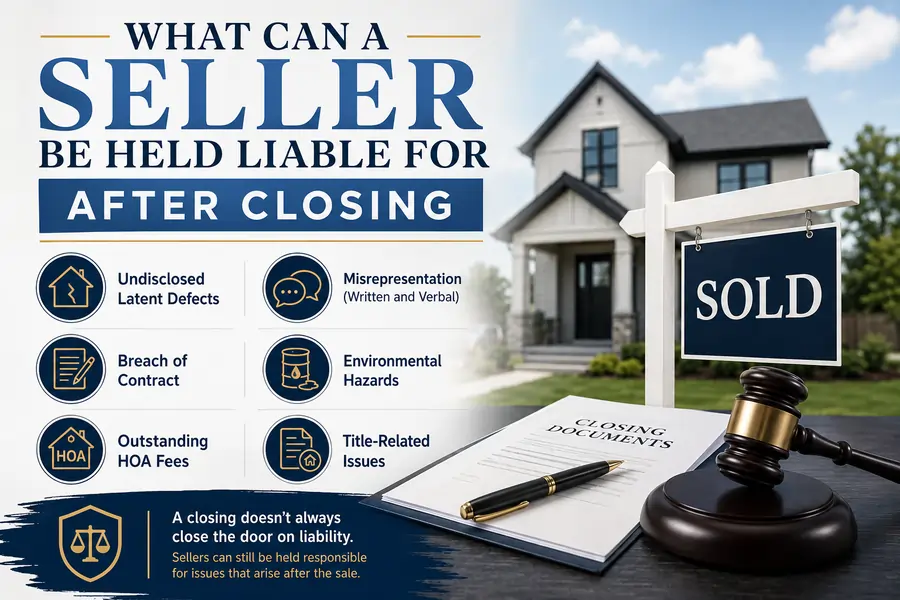
Seller liability does not cover every problem a buyer encounters after moving in. It applies to specific categories of failure.
Undisclosed Latent Defects
A latent defect is a problem not visible during a standard walkthrough or basic inspection. Common examples include foundation instability, hidden water intrusion, past termite damage, mold behind drywall, faulty electrical panels, and failing HVAC systems. If a seller knew about these issues and left them off the disclosure form, the buyer may have legal grounds to file a claim once the defect comes to light.
Misrepresentation (Written and Verbal)
Written statements on disclosure forms are not the only liability risk. Verbal representations carry legal weight too. Telling a buyer “the basement has never flooded” or “the roof was replaced two years ago” creates a factual claim. If the buyer later discovers those statements were untrue, a misrepresentation claim may follow, even if nothing was written down. Sellers should avoid making definitive statements about property conditions unless they can verify them with documentation.
Breach of Contract
If the purchase agreement included specific seller obligations, such as completing certain repairs before closing, leaving agreed-upon appliances, or resolving known code violations, failing to follow through creates direct liability. The buyer may seek compensation for those unfulfilled promises after the sale closes.
Environmental Hazards
Known environmental hazards fall under mandatory disclosure requirements in most states. These include radon gas, asbestos, lead-based paint (required by federal law in homes built before 1978), underground oil tanks, and known mold issues. Concealing these types of problems can result in substantial liability because they directly affect the health and safety of occupants.
Outstanding HOA Fees
If a property is part of a homeowners association and the seller had unpaid dues at the time of closing, the buyer may end up responsible for those fees. If that happens, the buyer can seek reimbursement from the seller. Settling all HOA obligations before closing is a straightforward way to eliminate this risk.
Title-Related Issues
Undisclosed liens, mortgages, or encumbrances on the title can create significant post-sale problems. If a buyer discovers after closing that the property carried an outstanding lien the seller did not disclose, the seller may face legal and financial consequences. Title insurance protects buyers in many cases, but it does not necessarily shield the seller from a fraud or misrepresentation claim.
Does Selling As-Is Protect You from Liability?
Selling a house as-is is one of the most commonly misunderstood concepts in real estate. Many sellers believe the phrase “as-is” removes all responsibility once the deal closes. It does not work that way.
An as-is sale tells the buyer the seller will not make repairs before or after closing. It signals that the purchase price reflects the property’s current condition. But it does not eliminate the seller’s legal obligation to disclose what the seller already knows about the property’s condition.
If you knowingly conceal a major defect and sell the home as-is, the buyer can still sue for fraud or misrepresentation after closing. The as-is designation addresses repair obligations, not disclosure requirements. Sellers who disclose known defects fully and honestly while also selling as-is are in a legally protected position. Sellers who use as-is as cover for hiding problems are not.
One important note: buyers who waive home inspections during an as-is sale may have a harder time proving the seller concealed information, since the buyer limited their own opportunity to discover defects. This is a practical factor, not a legal shield for the seller.
Does Selling to a Cash Buyer Reduce Your Liability?
Selling to a cash buyer, particularly a local home-buying company, can meaningfully reduce post-sale legal risk for several reasons.
Cash sales tend to close faster and with fewer contingencies than traditional financed transactions. Because cash buyers purchase properties in their current condition, the nature of the transaction itself reduces the surface area for post-closing disputes. There are no mortgage lenders requiring specific repairs, no lengthy inspection negotiations, and often no requests for seller warranties or extended obligations.
When sellers work with reputable local cash buyers, the transaction is typically documented clearly, the buyer understands the property’s condition going in, and the closing process is straightforward. This reduces the ambiguity that often leads to claims in traditional sales.
That said, even a cash sale does not give a seller license to conceal known defects. Full honesty during the disclosure process is still the right legal approach regardless of how the sale is structured. The difference is that a well-structured cash sale tends to limit the circumstances under which disputes can arise in the first place.
If you are dealing with a property that has known issues you are not able to repair, selling to a cash buyer can provide a fast, transparent path to closing that limits your ongoing exposure. This is often a practical solution for inherited homes, distressed properties, or houses with deferred maintenance.
What If the Seller Genuinely Didn’t Know About the Defect?
This is one of the most important distinctions in post-sale liability law, and most competitor articles gloss over it.
Seller liability is not strict liability. It does not apply simply because something went wrong with the property after closing. The legal question is whether the seller had actual knowledge of the defect and failed to disclose it.
If a foundation crack was completely hidden beneath flooring and no inspection, prior contractor, or previous disclosure had ever flagged it, a seller who genuinely had no awareness of the problem carries significantly less legal exposure than a seller who knew about it and stayed quiet. In most states, the buyer carries the burden of proving the seller had actual knowledge of the defect.
Documentation supporting regular maintenance, past inspection reports, completed repairs, and honest disclosure forms all work in the seller’s favor if a dispute arises later. The key principle is this: sellers are liable for what they know and hide, not for every unknown problem that appears after closing.
How to Protect Yourself from Post-Sale Liability
Reducing your liability starts before the listing goes live. The following steps are the most effective ways to protect yourself.
1. Complete your disclosure form thoroughly and honestly. Even if your state does not require a specific disclosure form, providing one voluntarily creates written proof of what the buyer was told. Include known issues even if you have already repaired them. A documented repair history actually strengthens your position.
2. Schedule a pre-listing inspection. A professional home inspection before you list allows you to identify problems early. You can choose to fix them, disclose them, or price accordingly. The inspection report also becomes evidence that you made a genuine effort to uncover issues before the sale.
3. Avoid making verbal representations about conditions you cannot verify. Casual statements like “the roof is in great shape” or “we never had water issues” can become liabilities. Stick to documented facts. If you do not know, say so.
4. Keep records of all repairs, correspondence, and disclosures. Many states allow buyers to file claims for up to 10 years after closing, which means documentation needs to stay organized and accessible long after moving day. Save receipts, contractor invoices, permit records, and any communication with agents or buyers.
5. Work with a real estate attorney for complex situations. If your property has a history of major repairs, unresolved code violations, or known environmental concerns, an attorney can review your disclosure forms and purchase agreement before signing. This is especially valuable in situations involving inherited homes, divorce sales, or properties with significant deferred maintenance.
6. Consider a cash sale to reduce post-closing exposure. For sellers dealing with homes that need repairs or have complicated histories, a direct cash sale eliminates many of the contingencies and inspection disputes that lead to post-closing claims. The transaction is faster, cleaner, and typically involves less opportunity for buyer-seller disagreements to escalate later.
How Long Are You Liable After Selling a House in Kentucky?
For homeowners in Louisville and throughout Kentucky, the relevant statutes of limitations for post-sale claims include:
- Written contracts: 5 years under Kentucky Revised Statutes Section 413.120
- Oral contracts: 5 years
- Fraud claims: Generally 5 years from discovery under Kentucky law
Kentucky requires sellers to complete a standard residential property disclosure form for most residential transactions. This form covers structural components, mechanical systems, water and sewage, environmental hazards, and other material conditions. Completing this form accurately and completely is the foundation of legal protection for Kentucky sellers.
If you are selling a property in Louisville with known issues and are unsure how to handle disclosures correctly, working with a local professional who understands Kentucky requirements is the right step before listing.
What Happens If a Buyer Threatens to Sue After Closing?
If a buyer contacts you with concerns after closing, the way you respond matters. Here is what typically happens and what to do.
First, do not panic or make informal promises about repairs or compensation. Any statements you make after closing can potentially be used in a dispute. Second, review your disclosure documentation and purchase agreement immediately. If you disclosed the relevant condition, you have a strong starting position.
Most post-closing real estate disputes never reach court. According to general real estate legal practice, the majority of claims settle through negotiation, mediation, or the buyer’s homeowner’s insurance or home warranty (if applicable). Many buyers have avenues other than suing the seller, and this limits how often disputes escalate into litigation.
If the situation escalates or you receive a formal legal notice, consult a real estate attorney in Kentucky immediately. Do not attempt to resolve a potential fraud or misrepresentation claim without legal counsel.
Can Selling Your Home Fast Help You Avoid Liability Issues?
A common concern among sellers in distress situations is that a fast sale means cutting corners on disclosures. The opposite is actually true for sellers who approach the process responsibly.
Selling quickly to a trusted local buyer like Sisters Who Buy Houses means fewer parties, clearer documentation, and less back-and-forth that can introduce miscommunication. It also means less time between identifying a problem and closing, which reduces the chance that conditions worsen in ways that could complicate the disclosure picture later.
Homeowners who are dealing with foreclosure, inheriting a property, or managing a home with deferred maintenance often find that a direct cash sale provides a clear, documented path to closing that protects them legally while also meeting their timeline needs.
Frequently Asked Questions
How long after selling a house can you be sued?
In most states, a buyer can file a claim against a seller for 2 to 10 years after closing, depending on state law and the type of claim. The clock often starts when the buyer discovers the issue rather than at closing, which can extend the practical liability period for hidden defects.
Can a buyer sue after closing even in an as-is sale?
Yes. Selling a property as-is limits repair obligations but does not remove the requirement to disclose known defects. If a buyer can demonstrate the seller knowingly concealed a material problem, a legal claim is possible regardless of the as-is designation.
What must a seller disclose when selling a house in Kentucky?
Kentucky sellers are required to complete a residential property disclosure form covering structural components, mechanical systems, water and sewage, environmental hazards, zoning violations, and other material facts known to the seller. Disclosure requirements apply to what the seller actually knows at the time of listing.
Does a cash sale protect a seller from liability?
A cash sale does not eliminate disclosure obligations. However, cash sales tend to close faster and with fewer contingencies, which reduces the circumstances that commonly lead to post-sale disputes. Full honest disclosure is still the legal and ethical baseline regardless of sale type.
What if the defect was unknown to the seller at the time of sale?
Seller liability generally applies to known issues that were not disclosed, not to problems the seller had no reason to be aware of. Documentation such as past inspection reports, maintenance records, and a completed disclosure form supports the seller’s position that they acted in good faith.
How do I protect myself legally when selling my home?
Complete disclosures thoroughly and honestly, schedule a pre-listing inspection, document all repairs and correspondence, avoid making unverified verbal statements about the property, and keep records for several years after closing. For complex situations, consult a real estate attorney before signing.
The Bottom Line on Seller Liability After a Home Sale
How long are you liable after selling a house? The answer is between 2 and 10 years in most states, with Kentucky’s written contract statute of limitations sitting at 5 years. Fraud or intentional concealment can extend that window further, particularly under the discovery rule, which starts the clock when the buyer finds the problem rather than when the sale closes.
The strongest protection available to any seller is straightforward: disclose what you know, document everything, and complete the process honestly. Sellers who do this are in a legally sound position regardless of what a buyer discovers later.
If you are facing a sale with known issues and want to avoid the complications that come with traditional listings, repairs, and lengthy disclosure negotiations, Sisters Who Buy Houses offers a direct path. We buy homes in Louisville as-is, for cash, with no commissions or hidden fees. Whether you are dealing with an inherited property, deferred maintenance, or simply want to sell quickly and cleanly, we can help you move forward. Get your no-obligation cash offer today.